שנה
2019



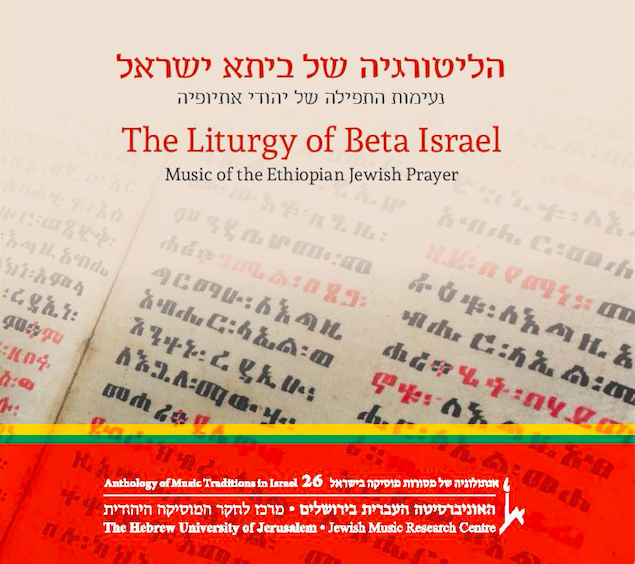

Ma’ārir (Shavuot). Soloist: Qes Yosef
Another prayer for Hedar Ma’arir and Ma’arir Seni. It can also be sung in the evening in the context of the cycle of the seven Sabbaths or when one removes the Torah scroll from the ark for its public reading in the prayer house. It can also be sung during the Sabbath meal. The text concentrates on the consecration of the Qessoch and on their role in the sacrifices for the transgressions of the people (Exodus 29:20). It then refers to the writing of the second set of Tables of the Law, to the Temple, and to God’s glory, the center of which is located in Zion. Adaptations of Deuteronomy 1o: 2 and 5 are to be found on these points, as well as of I Kings 8:29 and of Psalm 50:2-3. The text ends by closely linking the sacrifices with Moses, Aaron and his son Eleazar (cf. Numbers 20:22-29 on Aaron and Eleazar).
From the beginning of this chant, one is clearly aware of its measured nature. The dance like character of the piece quickly becomes concrete when the Qessoch scan the rhythm with their feet on the floor. The melody is in the hemiola pattern. The breakdown of the number of beats of each hemiola is steady, i.e. 5-6-11/5-6-11 for the repetitions of the f irst hemiola, and 4-4-8/4-4-8 for the following ones. The phenomenon of the soloist’s overlapping the end of the choir’s enunciation that often occurs in measured pieces of the Beta Israel liturgy takes place, in this case, over one or two pulsations.